
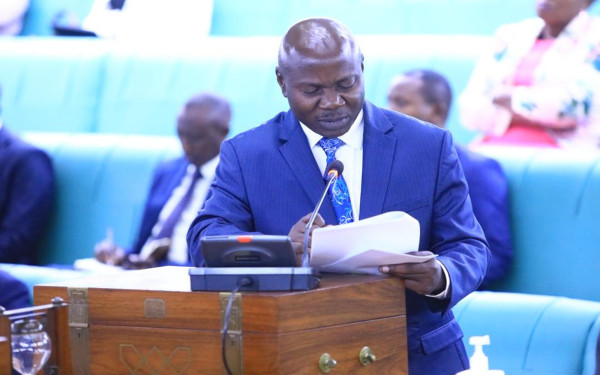
The Magistrates Courts (Amendment) Bill, 2026 when assented to by the President, will introduce reforms aimed at strengthening the capacity of lower courts, reducing case backlog at the High Court and improving access to justice.
The Bill that was passed by Parliament on Thursday, 26 March 2026 will see the amendment of the Magistrates Courts Act aims to increase the financial jurisdiction of magistrates, enhance their sentencing powers and streamline court procedures.
The Bill also sought to increase the pecuniary jurisdiction of magistrate’s courts, enhance their powers to impose higher fines, abolish the position of magistrates grade II and provide for transitional provisions.
A key reform under the law is the upward revision of the monetary limits that magistrates can handle in civil cases.
The Bill provides that, “the civil jurisdiction of a chief magistrate is increased from Shs50 million to Shs100 million and the jurisdiction of a magistrate from Shs20 million to Shs50 million.
The Chairperson of the Legal and Parliamentary Affairs Committee, Hon. Stephen Baka Mugabi said that Bill addresses the previous limits which were last revised in 2007 had been overtaken by inflation and economic changes.
He added that low thresholds had resulted in cases being unnecessarily filed in the High Court leading to congestion.
“The capping of the value of the subject matter is very low for the magistrates courts… cases that should be handled at the magisterial level end up in the High Court thereby causing backlog,” he said.
The proposed law expands the authority of chief magistrates to handle higher value cases with their civil jurisdiction increased to Shs200 million. This is aimed at reducing case backlog in the High Court and positions chief magistrates as more central in handling commercial, land, family, and civil disputes that previously escalated to higher courts.
The Bill also abolishes the position of magistrates grade II aligning the Act with the Judiciary’s current structure, since its already abolished under the Judiciary Service structure where the position had already been removed administratively but was still reflected in the Magistrates Courts Act.
“The position of Magistrate Grade II was removed from the approved structure of the Judiciary but its continued presence in the law created inconsistencies. The amendment therefore, repeals all provisions relating to the position, leaving chief magistrates and magistrates grade I as the recognised judicial officers at that level,” the report read in part.
In a move expected to improve efficiency, the law empowers chief magistrates to transfer cases filed in courts without jurisdiction instead of dismissing them outright.
Currently, courts lacking jurisdiction must dismiss such cases, forcing litigants to refile and incur additional costs.
The Bill states that the reform will enable judicial officers to refer cases to chief magistrates for transfer to the High Court instead of dismissing them for lack of jurisdiction thereby reducing delays and hardships for court users.
“These changes will not only decongest the High Court but also bring justice services closer to the people by empowering magistrates courts to handle more cases effectively,” Baka Mugabi added.
The Attorney General, Hon. Kiryowa Kiwanuka, said the provisions in the Bill have been informed by empirical data from the Judiciary.
“I know there is a proposal to increase the threshold for the chief magistrates to Shs300 million but since the committee report is based on empirical evidence from the Judiciary, let it be adopted,” Kiryowa Kiwanuka said.
Distributed by APO Group on behalf of Parliament of the Republic of Uganda.


