
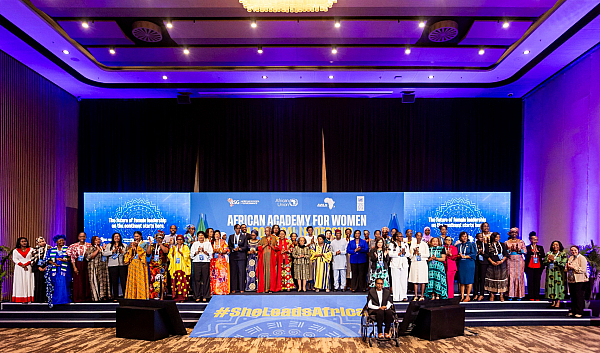
The United Nations Development Programme (UNDP) (www.UNDP.org), in partnership with the African School of Governance (ASG), the African Union Commission (AUC) and the African Women Leaders Network (AWLN), has concluded the five-day launch and induction of the African Academy for Women in Political Leadership, held in Kigali from 3 to 7 August 2026.
The Academy’s inaugural cohort of 40 women political leaders, selected from more than 1,300 applications across 28 African countries and the Caribbean, brings together cabinet ministers, parliamentarians, mayors, governors, senators, political party leaders and aspiring young women. More than 60 percent come from countries scheduled to hold presidential or parliamentary elections within the next two years, placing the Academy’s executive training programme directly into live campaigns, legislatures and cabinets.
The Academy was officially launched on 3 August in the presence of representatives of the Government of Rwanda, former Heads of State and Government, ministers, parliamentarians, development partners, academia, private sector, civil society organizations and media.
“Participating in this academy is an opportunity to network with each other, to learn from each other, to teach each other, to validate your already known and experienced practices, but most importantly, to create a network of support that is going to have a lifelong impact in your careers,” said Francis Gatare, President, African School of Governance.
The launch of the Academy represents a strategic investment in Africa’s democratic future. It places women political leaders at the centre of strengthening African institutions, deepening democratic governance and advancing peace, security and sustainable development across the continent.
“Today marks much more than the inauguration of another institution. It represents a defining moment in the evolution of the African Women Leaders Network,” said H.E. Bineta Diop, Co-Convenor, African Women Leaders Network. “For years, we have advocated for women’s leadership. Today, we move decisively from advocacy to implementation,” she added.
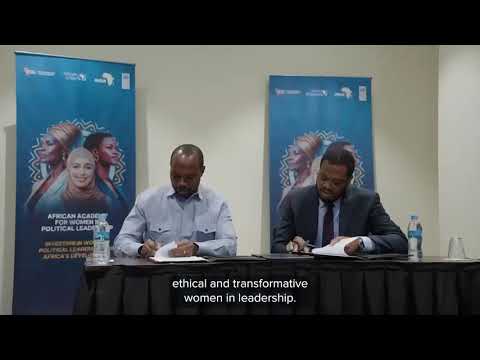
On the margins of the academy launch, UNDP and the African School of Governance Foundation signed a Memorandum of Understanding to build a continent-wide ecosystem for women’s transformative leadership in Africa. The five-year framework establishes cooperation on governance, including to support women in political leadership through the African Academy for Women in Political Leadership, launched this week; to reach women leaders across the continent; to create learning opportunities for Africa Young Women Leaders (AfYWL) fellows; to build alumni networks contributing to Agenda 2063 and the Sustainable Development Goals (SDGs); to engage national women’s networks and political forums; and to adapt leadership training to local contexts and languages.
The Academy’s curriculum confronts the barriers that keep capable women out of office, including the cost of politics. Alongside political leadership, coalition-building, communications and ethical leadership, the programme imparts direct knowledge of campaign financing.
“We must not only count the women who enter politics but, more importantly, count the women who hold real influence once they are there. Capable women are stopped not for want of talent, but for want of money, of protection, of coalition. On this continent, it can cost an average of US$40,000 to contest a parliamentary seat,” said Dr. Jide Okeke, Director, UNDP Regional Programme for Africa. “This Academy teaches campaign financing without apology, alongside legislative craft, coalition-building, communications and ethical leadership. Anyone who declines to teach women about raising money has already decided who is going to lose,” he added.
One of the most significant features of the Academy is its deliberate investment in emerging leaders. By bringing together experienced and emerging leaders, this Academy recognizes that leadership is strengthened through intergenerational exchange.
“The question is no longer whether African women are ready to lead. History has already answered that question. The real question is whether our institutions are prepared to fully recognize, support and benefit from that leadership,” said H.E. Amb. Bankole Adeoye, AU Commissioner for Political Affairs, Peace and Security. “The African Union is a ready partner. We are committed to working strongly to reflect this important shift from advocating for women’s participation to deliberately building the pipeline of capable, ethical and transformative women in leadership,” he added.
Over five days, the cohort worked through the Academy’s opening modules — the history of African women’s political authority; money, power and political financing; narrative, visibility and political communication; coalitions, parties and institutions; and leadership resilience — delivered through practitioner-led workshops, experience-sharing sessions, clinics and peer exchange.
Highlights of the week included an extended conversation between the cohort and H.E. Sahle-Work Zewde, Former President of Ethiopia; H.E. Catherine Samba-Panza, Former President of the Central African Republic; H.E. Dr. Nkosazana Dlamini Zuma, Former Chairperson of the African Union Commission; Hon. Victoire Tomégah-Dogbé, Former Prime Minister of the Republic of Togo; and Rt. Hon. Lamein Blanchette, Speaker of Parliament of Saint Kitts and Nevis.
The programme also featured a high-level dialogue with Rt. Hon. Justice Domitilla Mukantaganzwa, Chief Justice of the Republic of Rwanda; a virtual engagement with H.E. Ahunna Eziakonwa, United Nations Secretary-General’s Special Adviser on Africa; and a reflective visit to the Kigali Genocide Memorial, examining the consequences of failed leadership and the role of visionary leadership and reconciliation in rebuilding a nation.
The residential week in Kigali opens a four-week programme. The cohort now continues with three weeks of online learning, structured mentorship and sister circles, followed by sustained alumni engagement designed to keep the network active through campaigns, legislative terms and public office.
Distributed by APO Group on behalf of United Nations Development Programme (UNDP).
Notes to editors:
The African Academy for Women in Political Leadership was co-designed by UNDP in partnership with the AUC, AWLN and ASG, with its curriculum developed and validated through an inclusive co-design process in Kigali in October 2025. The inaugural cohort was selected through a competitive, merit-based process from more than 1,300 applications, with representation across all five African regions and the Caribbean, linguistic diversity across Anglophone, Francophone, Lusophone and Arabophone Africa and balance across executive, legislative and party leadership roles. The full programme runs for four weeks: one residential week in Kigali followed by three weeks of virtual learning and mentorship.
For further information or media inquiries, please contact:
Ugochukwu Kingsley Ahuchaogu
Regional Communications and External Engagement Specialist
Regional Programme for Africa
UNDP Regional Service Centre for Africa
ugochukwu.kingsley@undp.org
Stella Tushabe
Communications Officer
African School of Governance
stushabe@asg.ac
Abraham Kebede
Communications Officer
African Union Commission
abrahamk@africanunion.org
Fatima Daou
Communications Officer
African Women Leaders Network
communication@awlnafrica.net
admin@awlnafrica.net
About the United Nations Development Programme:
UNDP is the leading United Nations organization fighting to end the injustice of poverty, inequality, and climate change. Working with our broad network of experts and partners in 170 countries, we help nations build integrated, lasting solutions for people and the planet.
Learn more at www.UNDP.org/africa/
About the African School of Governance:
ASG’s mission is to nurture leaders to drive Africa’s sustainable development by providing innovative public policy education, cutting-edge research, and a platform for policy engagement that fosters transformative governance tailored to the continent’s unique values and opportunities.
Learn more at www.ASG.ac
About the African Union Commission:
The African Union Commission is the Secretariat of the African Union, a 55-Member State regional organization. Its vision is that of “An integrated, prosperous and peaceful Africa, driven by its own citizens and representing a dynamic force in the global arena” and its mission is to be “An efficient and value-adding institution driving the African integration and development process in close collaboration with African Union Member States, the Regional Economic Communities and African citizens”
Learn more at www.AU.int/en
About the African Women Leaders Network:
The African Women Leaders Network (AWLN), established in 2017 with the support of the African Union and the United Nations, is a continental platform advancing women’s leadership for peace, governance and sustainable development. Through its 39 National Chapters, intergenerational leadership model, strategic partnerships and advocacy, AWLN strengthens women’s political participation, fosters peer learning and collaboration, and supports current and future generations of African women leaders across the continent.
Learn more at www.AWLNAfrica.net


