

Kenya is spearheading a regional initiative to develop a coordinated maritime security strategy aimed at countering transnational threats, safeguarding vital shipping routes and advancing sustainable economic development across the Red Sea, Gulf of Aden and Western Indian Ocean.
Through the Kenya Navy, which chairs Working Group 3 on Operational Cooperation and Coordination at Sea under the Djibouti Code of Conduct Jeddah Amendment (DCoC/JA), Kenya is hosting a five-day Regional Maritime Security Strategy Development Workshop at Voyager Beach Hotel in Mombasa, from 2 to 6 November 2026.
The workshop brings together representatives from Bahrain, Comoros, Djibouti, Ethiopia, France, Kenya, Maldives, Mauritius, Mozambique, Seychelles, Somalia and Tanzania, alongside regional and international partners, to develop a common strategic framework for addressing evolving maritime security challenges.
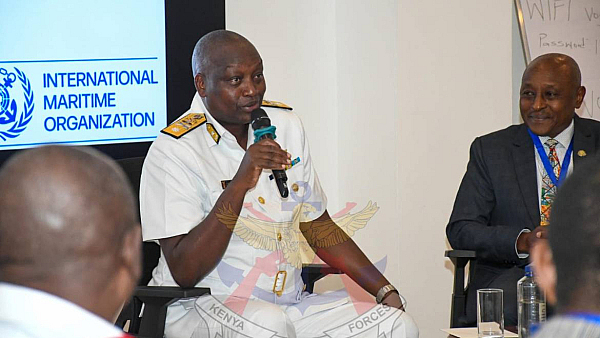
Speaking on behalf of the Commander Kenya Navy during the opening ceremony, the Deputy Commander Kenya Navy, Brigadier Sankale Kiswaa, called for a practical, coordinated and sustainable approach to regional maritime security.
He emphasised that the proposed strategy must establish clear governance structures, harmonise operational standards, enhance information sharing and interoperability, and provide mechanisms for resource mobilisation and accountability while respecting national priorities and commitments.
Brigadier Kiswaa further underscored the importance of robust legal frameworks to facilitate the investigation and prosecution of maritime offenders, greater involvement of coastal communities and the adoption of emerging technologies to enhance maritime domain awareness and coordinated operational responses.
The International Maritime Organization (IMO) Project Manager for the Djibouti Code of Conduct, Mr Kiruja Micheni, highlighted the need for a unified strategy linking national maritime security responsibilities with regional cooperation.
He identified piracy, armed robbery against ships, maritime terrorism, illicit trafficking, illegal, unreported and unregulated fishing, and threats to critical maritime infrastructure as persistent challenges requiring collective action. He further emphasised that maritime security must support safe international trade, sustainable marine resource management and Blue Economy development.
Building on progress under the DCoC/JA, the workshop will advance three strategic outputs: a Regional Maritime Security Risk Register to identify and prioritise threats; a Regional Maritime Security Strategy outlining shared objectives and operational priorities; and an Implementation Plan defining institutional responsibilities, resource requirements, timelines and measurable performance indicators.
The initiative also builds on the development of Working Group 3’s Concept of Operations and Implementation Roadmap, alongside proposals for a Combined Maritime Task Force to enhance coordinated responses to maritime threats while complementing existing multinational security arrangements.
The workshop brings together partners including Denmark, India, the European Union CRIMARIO, Combined Maritime Forces, UNITAR, the Regional Coordination Operations Centre and the African Union, reflecting the importance of international collaboration in securing shared maritime interests.
The outcomes are expected to inform deliberations at the forthcoming ninth DCoC/JA High-Level Meeting in Antananarivo, Madagascar, where participating states will consider the proposed strategy, the Common Maritime Security Lexicon and progress in operational cooperation at sea.
Kenya’s leadership of Working Group 3 reinforces its strategic role in advancing collective maritime security, promoting regional stability and safeguarding the maritime domain as a vital gateway for international trade, Blue Economy growth and shared prosperity.
Distributed by APO Group on behalf of Ministry of Defence – Kenya.


