
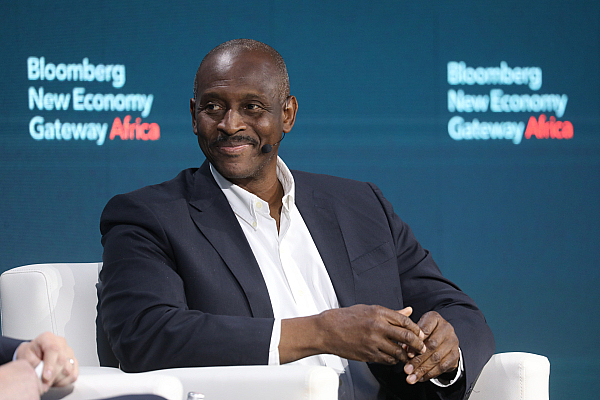

By Herbert Mensah, President of Rugby Africa (www.RugbyAfrique.com) and Chairman of World Rugby’s Regions
Rugby cannot afford to speak only to those who already love it. We cannot expect the next generation to simply inherit our passion. We must earn it, inspire it and give fans reasons to come back.
As President of Rugby Africa and a Member of World Rugby’s Executive Board, I believe rugby is the best product in the world. But belief alone does not fill stadiums, attract broadcasters or build sustainable unions. Great products must be presented, promoted and made accessible.
During the opening weekend of the Nations Championship and the inaugural Nations Cup, I saw the future of our beautiful sport being tested in real time.
This new structure brings together the world’s 12 leading rugby countries in the Nations Championship and an additional 12 other Rugby World Cup-qualified nations in the Nations Cup, creating meaningful matches, greater opportunity and more stories for the world to discover.
For 24 hours, I was engrossed and riveted. Rugby delivered the kind of entertainment people dream about: physicality, skill, uncertainty, courage and national pride.
Japan beat Italy 27-10. Ireland edged Australia 33-31. New Zealand beat France 34-32. South Africa defeated England 45-21. Wales beat Fiji 39-24. Samoa beat Hong Kong China 66-19. Chile beat Romania 48-31. Tonga beat Zimbabwe 36-26. The USA beat Portugal 30-29. Canada and Spain drew 42-42.
The results mattered, but the meaning mattered more. The reality is simple: sport is big business. Rugby can no longer behave as if it operates outside the world of money, audiences, media rights, partnerships and consumer choice.
If our game is to thrive, it must inspire the lifelong supporter and captivate the person watching for the very first time. Opportunity cannot remain concentrated in the hands of a few; the future of our sport must be built by the many.
People have a right to choose how they spend their time and money. Rugby must therefore offer a product that appeals not only to the converted, but also to those discovering the game for the first time.
For too long, rugby has relied heavily on the Rugby World Cup as its biggest commercial engine every four years. But what happens in between? How do we create revenue, structure and meaning across the rest of the calendar?
A global sport cannot survive only through occasional moments. It must build consistency. It must create anticipation. It must give fans reasons to follow the journey, not only the destination.
In October 2023, World Rugby approved the new global calendar structure following a close and contested Council vote after years of debate and work.
At the time, many regions were asked not to support it. I was told Africa was not guaranteed more places and therefore should resist. But for me, that was not the point. The point was the future.
For us in Africa, talent is not the issue. What Africa needs is structure, investment and opportunity.
Zimbabwe’s performance against Tonga gave me hope. To compete as they did, especially after the challenges Zimbabwe faced, showed character and potential. However, potential must be supported by systems: better competitions, stronger pathways, improved logistics, better welfare and a commercial model that allows unions to grow.
That is why the Nations Cup matters to Africa. It gives emerging nations meaningful competition and a clearer connection to the global game. It reminds us that talent exists everywhere, but opportunity does not. Our responsibility is to close that gap.
If we want a stronger seat at the table by 2031, we must prepare now.
The Nations Cup arrives during the 2026 FIFA World Cup, and rugby is paying attention.
Football is not perfect. There are many things to criticise: the excess, the politics and the money. But football understands the event economy. It knows how to turn matches into global moments, commercialising national pride, rivalry and community.
With 48 teams participating for the first time in the FIFA World Cup, the lesson is clear: be unapologetic about reach. Football wants more countries, more fans, more stories and more markets.
Rugby should not copy football blindly. We must remain rugby. But we must learn from football’s confidence. We must package our product better. We must make casual fans care.
Women’s rugby has already shown what is possible when rugby gets the structure and presentation right. I attended the 2025 Women’s Rugby World Cup final at Twickenham Stadium and felt goosebumps. The historic match set a world record for attendance at a women’s rugby match, with 81,885 fans in the stadium. It showed that when we invest properly, promote properly and stage events properly, the audience will come.
I commend World Rugby’s Chief Executive Officer, Alan Gilpin, and his team for delivering a memorable show on the first weekend of the Nations Cup. Now we must turn entertainment into enterprise. We must sell the stories better. We must build the rivalries. We must promote the players. Rugby has the product. The question is whether we have the courage to commercialise it properly and reinvest the returns.
The future of rugby will not be decided only by those already inside the stadium. It will be decided by those who have never bought a ticket, never watched a match and have not yet discovered the game. Our responsibility is to give people every reason to choose rugby.
To Download Official Opinion Piece: Click Here (https://apo-opa.co/4wDikBS)
Distributed by APO Group on behalf of Rugby Africa.
Media Contact:
Nicole Vervelde
Communications Manager
nicole.vervelde@rugbyafrique.com
About Rugby Africa:
Rugby Africa (www.RugbyAfrique.com) is the governing body of rugby in Africa and one of the regional associations under World Rugby. It unites all African countries that play rugby union, rugby sevens, and women’s rugby. Rugby Africa organizes various competitions, including the qualifying tournaments for the Rugby World Cup and the Africa Sevens, a qualifying competition for the Olympic Games. With 40 member unions, Rugby Africa is dedicated to promoting and developing rugby across the continent. World Rugby highlighted Ghana, Nigeria and Zambia as three of the six emerging nations experiencing strong growth in rugby.


