
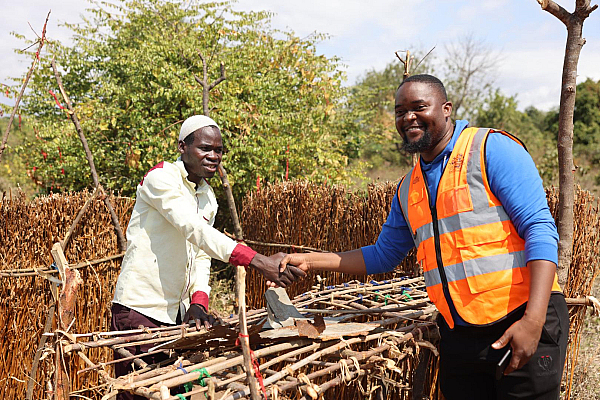
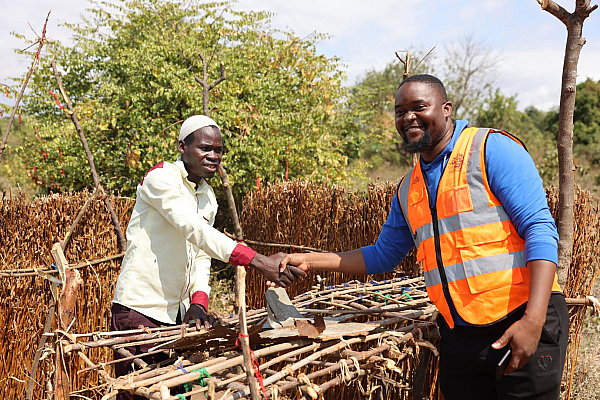
When schools closed in Chikwawa and many parts of the country, many children left their homes to attend traditional initiation camps, known locally as ku Simba. While these cultural gatherings are an important part of community life, they also presented a challenge for health workers determined to ensure every eligible child received the polio vaccine.
For Yohane Botha, an initiation leader from Ntsapa in Group Village Bendana, the solution was clear.
“These children deserve to be protected from polio. They should not be left behind because of tradition,” he says.
As vaccination teams moved through communities during the polio campaign, Botha and other initiation leaders welcomed them into the camps, giving health workers access to children who would otherwise have been difficult to reach. Their willingness to open the doors of the initiation centres ensured that cultural traditions did not become a barrier to essential health services
For Botha, the partnership showed that tradition and health are not competing interests. Instead, they serve the same communities and depend on one another.
“Tradition cannot exist without healthy members of the community,” he explains, noting that traditional leaders often rely on health facilities whenever medical problems arise.
The collaboration proved especially important during the campaign, when many eligible children were living away from home at initiation centres. According to Ebenezer Banda, Chikwawa District’s Expanded Programme on Immunization Coordinator, health workers had to go the extra mile to find and vaccinate children wherever they were even in the thick forest where most of these camps were situated. The support of traditional leaders made that possible.
“When schools were closed, the teams needed to go an extra mile to reach eligible children who were living in confinement at initiation centres,” Banda says.
Traditional leaders also played another critical role: helping communities understand the importance of vaccination. Group Village Headman Maseya of Kafere believes that protecting children from polio requires a joint effort between community leaders and the health sector. By listening to community concerns, addressing myths and misconceptions, and encouraging families to trust health advice, traditional leaders can help remove barriers that prevent children from being vaccinated.
The partnership between traditional leaders and health workers demonstrates that successful vaccination campaigns are built on trust and community participation. By opening their doors to vaccination teams, initiation leaders helped ensure that children were reached regardless of where they were staying.
The results speak for themselves. Chikwawa achieved reported vaccination coverage of 102 percent, reflecting the collective effort of health workers, traditional leaders, and communities working toward a common goal.
The experience in Chikwawa offers a powerful lesson: protecting children is a shared responsibility. Tradition and health can coexist, communicate and work together to ensure that cultural practices do not become barriers to essential health services.
By building bridges between traditional institutions and the health system, Chikwawa is showing that when communities open their doors and health workers are willing to go the extra mile, no child has to be left behind—even when they are far from home.
Distributed by APO Group on behalf of WHO Regional Office for Africa.


