
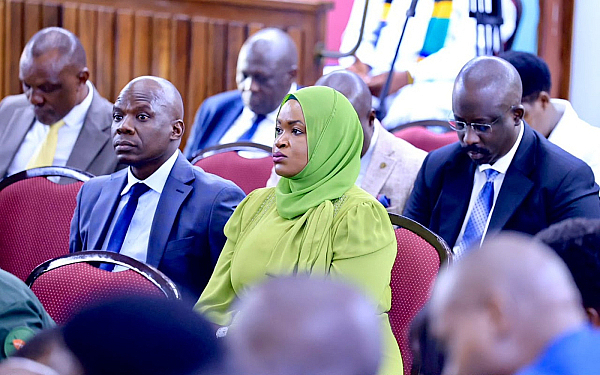
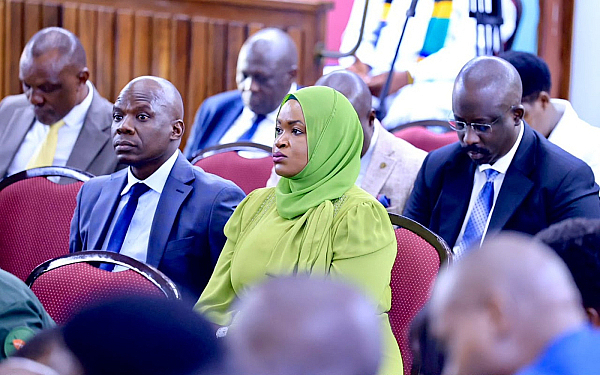
Parliament has approved a motion calling for improved geriatric healthcare and stronger social protection for older persons with legislators pressing government to honour its commitment to increase the Senior Citizens Grant for the Elderly (SAGE) from Shs25,000 to Shs35,000 a month.
Sironko District Woman Representative, Hon. Asha Mafabi moved the motion on Tuesday, 18 August 2026 amid concerns that Uganda’s growing population of older persons is struggling to access specialised healthcare, social protection and money meant to support them.
The debate also exposed the gap between government’s announcement of a higher SAGE and its implementation with the Minister of State for Elderly Affairs, Hon. Jacqueline Mbabazi admitting that the Shs35,000 payments was not provided for in the 2026/27 national budget.
She said government nevertheless needed to find the money because older persons were supporting millions of dependants.
“The people above 60 are looking after families with a population of 7.2 million people and they are the only ones looking after these people. And therefore, it is important to get that Shs35,000,” she said.
The motion noted that Uganda has more than 1.4 million people aged 60 and above many of whom face age related and non-communicable diseases, including hypertension, diabetes, arthritis, cancer and dementia.
Mafabi called for dedicated geriatric units, trained health workers, age friendly facilities, regular health check-ups and expanded community and home based healthcare, particularly in rural and hard-to-reach areas.
MPs also raised concerns about the accessibility of SAGE payments.
Kole South MP, Hon. Boniface Okot said older persons often travel long distances to receive the grant and urged government to explore alternative payment platforms.
“Government should consider accessible platforms like mobile money so that the older people do not travel these long distances,” Okot said.
He also questioned the cost of administering the programme saying about Shs30 billion of the approximately Shs120 billion allocated to SAGE goes towards administration.
Okot called for investment in specialist training noting that Uganda currently lacks institutions offering geriatric medicine at master’s level.
The shortage of specialists was echoed by Hon. Mbabazi who said Uganda has only three geriatric nurses and no formal training programme for geriatric healthcare personnel.
“As a ministry, we are engaging the Ministry of Health so that we discuss this area of geriatric care,” she said adding that government is also engaging Makerere University to introduce geriatric doctors and nursing training.
The Chief Government Whip, Hon. Jane Ruth Aceng however, said geriatric care had already been incorporated into the National Development Plan IV, including provisions for training doctors and nurses.
Aceng also cautioned against creating a health insurance scheme exclusively for older persons arguing that a national scheme based on solidarity will provide better protection.
“If we are to have an insurance targeted only to the elderly, as a country we are likely to fail. We need an insurance scheme that covers all of us, including the children because the principle is solidarity,” she added.
Rukiga County MP, Hon. Patrick Kiconco said reducing the eligibility age to 65, as previously announced by government will increase beneficiaries to about one million and require substantially more funding.
He proposed a phased expansion beginning with older age groups before eventually covering everyone aged 65 and above.
Kiconco said the current programme supports about 316,000 older persons and warned that the 65-year threshold requires an additional Shs252 billion bringing the total annual requirement to Shs373 billion if the grant is set at Shs35,000.
Older Persons Representative, Hon. Catherine Mavenjina Akumu urged government to introduce health insurance for older persons as they await the promised increase in SAGE.
Ntenjeru County South MP, Hon. Fred Baseke described support for older persons as a national obligation saying many remained in poverty while dealing with chronic illnesses and limited access to healthcare.
“Investing in older persons is not a burden on government. It is an investment in dignity, welfare and social stability,” Baseke said.
Distributed by APO Group on behalf of Parliament of the Republic of Uganda.


