
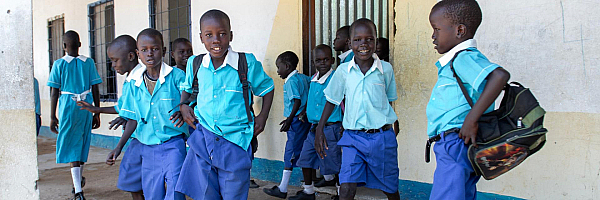

Like many across Africa, young people in Sudan face a difficult labour market, with few formal jobs and limited access to finance and training.
In Sudan, however, these challenges have been worsened by a conflict that has disrupted businesses and livelihoods and narrowed opportunities for young people. Many also want a greater role in rebuilding their country and in the decisions that will shape its future.
These were among the issues raised during engagements with a cross-section of young Sudanese in Khartoum, including students, entrepreneurs and young professionals.
The discussions were part of ongoing multi-country consultations by the Economic Commission for Africa (ECA) for its Economic Report on Africa 2027, which focuses on Shaping Africa’s Future of Work: Youth Employment, Growth and Fiscal Resilience.
Besides a group discussion with about 20 young people, the engagements included separate meetings with Ali Ahmed, President of the Sudan Youth Union, which has structures across Sudan’s 18 states, and Rimah Hamid, a member of its management team.
Young Sudanese spoke about the difficulty of finding decent work, starting businesses without adequate financing and accessing affordable training. Information about available programmes and opportunities does not always reach them. Conflict has made these problems considerably harder, disrupting production and markets, closing businesses and affecting livelihoods through displacement.
Finding work and building a future in Sudan
Formal employment opportunities are scarce and much of the available work is informal. Young people also spoke about the importance of personal connections in accessing the few formal opportunities that exist.
Starting a business is an option for some, but incomes often barely cover basic needs, leaving little money to invest in a business. Access to finance is limited and training can be expensive.
The same concerns came up in separate discussions with officials from the Central Bank of Sudan and the Ministry of Youth. They described the employment situation facing young people as dire, with many looking for any opportunity to gain experience, including through volunteering. Access to finance and training were also identified as important constraints.
For some young Sudanese, the lack of opportunities is part of the calculation about whether to leave the country. Others want to stay, and some are returning from abroad.
Several of those consulted spoke about wanting to remain in Sudan and take part in its recovery. For many, staying was also about dignity and the possibility of building a future in their own country.
Economic hardship is also changing the role of women in some communities. As household incomes have fallen, more women are looking for work, training and other ways to earn an income. Families that may previously have relied on men as the sole earners can no longer always afford to do so.
According to some of the young people consulted, women in certain rural areas may still need permission from a male head of household to work outside the home. They also noted that women tend to have less access to finance and information and are less involved in decision-making than men.
For women who have started working as a result of falling household incomes, the question is whether they will be able to remain economically active as conditions improve, with better access to finance, training and other opportunities.
A greater say in recovery and peacebuilding
The conflict has destroyed jobs and disrupted education and training. It has also required some young people to assume greater responsibilities.
The health sector was one example raised during the discussions. Shortages caused by the conflict meant that some young medical graduates who would previously have remained in training took on greater responsibilities in hospitals.
Young people also want a greater role in decisions about Sudan’s future. Those consulted felt that youth participation in decision-making remains limited, including within some institutions intended to represent them. Young Sudanese also have a history of civic mobilization, including the role they played during the 2019 uprising.
There was also a strong view that peace cannot be achieved without the meaningful participation of young people.
The Sudan Youth Union is preparing a nationwide dialogue to better understand young people’s priorities and increase their participation in decision-making. Its representatives spoke about reaching young Sudanese inside and outside the country, including across divisions created by the conflict.
They also want stronger links with regional and international youth networks to exchange experiences and connect with their peers elsewhere in Africa.
The young people ECA engaged with see employment and entrepreneurship as central to Sudan’s recovery. They also want a greater say in decisions about rebuilding the country and securing peace.
For many of the young Sudanese consulted, these issues are closely connected. They want the opportunity to build a future in Sudan and a greater say in what that future will look like.
Sudan illustrates how interruptions to debt-relief processes can prolong fiscal constraints and sharpen trade-offs among stabilization, reconstruction and productive investment in young people.
Distributed by APO Group on behalf of United Nations Economic Commission for Africa (ECA).


