
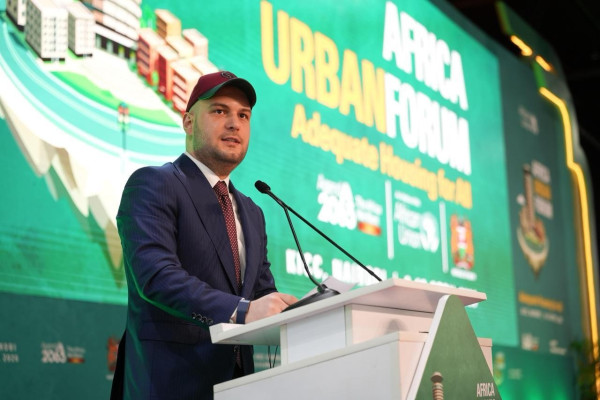
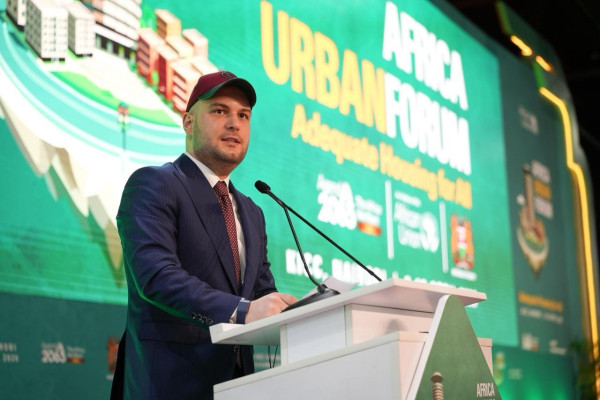
Samed Agirbas, COP31 (https://apo-opa.co/4u3OpBB) Climate High-Level Champion and President of the Zero Waste Foundation (www.sifiratikvakfi.org/en), participated in the Second Africa Urban Forum (AUF2) held in Nairobi from 6–10 April, engaging with regional and international stakeholders to advance climate justice, strengthen global cooperation, and promote circular economy solutions through strategic partnerships with Africa.
“We are here for global justice,” said Agirbas. “Climate change is a shared challenge that requires collective responsibility and cooperation, not a model based on aid but on equal partnership. As we move towards COP31, we must build a global agenda rooted in fairness, shared knowledge and joint action for sustainable cities and resilient communities.”
Strengthening climate diplomacy through Africa
Agirbas’s participation in AUF2 formed part of a broader COP31 diplomacy effort, aimed at aligning global priorities with the needs and perspectives of African countries. His engagements reflected Türkiye’s growing leadership in sustainability and its commitment to building inclusive, partnership-driven solutions.
Throughout the forum, the Zero Waste Foundation emphasised the importance of climate justice as a guiding principle, underlining that sustainable development must be equitable and accessible to all. The discussions focused on practical pathways to implement circular economy models and effective waste management systems, particularly in rapidly urbanising regions.
Türkiye’s zero waste approach was presented as a scalable and collaborative model, demonstrating how national experience can contribute to global sustainability goals through mutual exchange rather than unilateral frameworks.
Advancing sustainable cities and circular economy
During AUF2, Agirbas highlighted the critical role of sustainable cities in addressing climate challenges. Urban resilience, waste management and resource efficiency were central themes in discussions with key stakeholders.
Meetings were held with Dr. Aklilu Fikresilassie, Resilient Cities Director at WRI Africa, and Dr. Meggan Spires, Climate Change Director at ICLEI Africa, focusing on strengthening cooperation in urban sustainability and climate action. Engagements also included discussions with Anacláudia Rossbach, Executive Director of UN-Habitat, on advancing global urban development agendas.
These interactions reinforced the need for integrated approaches that combine policy, innovation and local expertise. The Zero Waste Foundation underscored the importance of embedding circular economy principles into city planning, enabling long-term environmental and economic benefits.
Engaging with communities and youth on the ground
During his visit to Nairobi, Agirbas also carried out field visits to disadvantaged communities, including Kibera and Mathare, engaging directly with local residents and youth leaders. Reflecting on Kibera, he said: “We want to amplify the voice of climate justice from Kibera to the world. Protecting our shared home begins with protecting one another.”
Visiting a local school, Agirbas highlighted the vulnerable conditions faced by communities affected by climate change and poverty, noting that many struggle to survive on just 10–15 dollars a month and face life-threatening risks linked to climate impacts.
In Mathare Community Park, he met with around 20 young leaders to discuss youth responses to climate emergencies such as flooding and delivered a brief presentation on his Champion role. The visit concluded with a tree planting.
Building strategic partnerships for COP31
Agirbas’s programme in Nairobi also included meetings aimed at expanding cross-sector collaboration. Discussions with Dr. Elvan Kuzucu Hıdır of the T3 Foundation and Zeliha Sağlam of the African Culture House highlighted the role of technology, cultural exchange and community engagement in sustainability efforts.
These engagements reflected a broader strategy to strengthen ties between Türkiye and Africa through shared objectives and joint initiatives. Rather than positioning sustainability as a one-sided effort, the Zero Waste Foundation framed it as a collaborative journey shaped by mutual learning and co-development.
“As we continue our preparations for COP31, it is essential that we uphold a unified global agenda,” commented Agirbas. “Our engagements in Nairobi have clearly shown that regional dialogue can play a decisive role in shaping global climate action. Lasting solutions will only be possible through strong partnerships, shared responsibility and a firm commitment to climate justice.”
Distributed by APO Group on behalf of Zero Waste Foundation.
Contact:
Ahmet Musa Bala
basin@sifiratikvakfi.org
About the Zero Waste Foundation:
The Zero Waste Foundation is Türkiye’s leading platform for advancing circular economy solutions and sustainable resource management at both national and global levels. Established under the honorary leadership of First Lady H.E. Emine Erdoğan, the Foundation develops and implements programs that reduce waste, increase efficiency, and align environmental policy with climate goals.


