
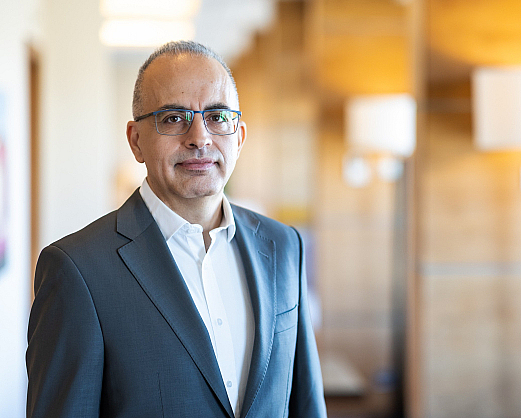
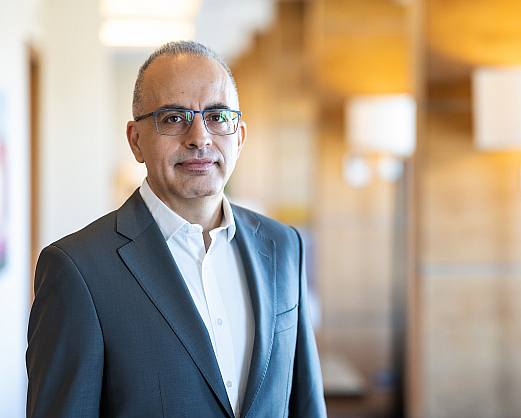
Africa’s negative international reputation costs the continent billions of dollars each year in higher borrowing rates, lost investment, and reduced economic opportunities , but distinguishing unfair media stereotypes from genuine governance failures is the first step to fixing it, according to Fadi El Abdallah, Chief Strategic Advisor, Reputation and Crisis Communications at APO Group (https://APO-opa.com).
El Abdallah, who served for 15 years as the official Spokesperson and Head of Public Affairs of the International Criminal Court (ICC), appeared live on SABC Channel Africa on 26 October 2026 to discuss how African governments, businesses, and institutions should respond when their credibility comes under attack and how to rebuild public trust once damaged.
Listen to the full interview: https://apo-opa.co/4e3JfzX
Key Facts
- Africa loses billions of dollars annually through higher sovereign borrowing costs driven in part by negative international media narratives about the continent.
- Disinformation campaigns are now cheap and fast to launch: the speed of producing false information is extremely high, the cost extremely low, and the spread can be devastating.
- Most African institutions and companies lack the professional infrastructure to counter disinformation campaigns.
- APO Group’s Strategic Reputation and Crisis Communications division, led by Fadi El Abdallah, was established to fill this gap
- The full announcement of Fadi El Abdallah’s appointment is available here: https://apo-opa.co/4zdmx0
On Disinformation
“The cost of disinformation for African countries is real: less investment, higher borrowing rates, economic damage, and in the worst cases, threats to state stability. What makes it so dangerous now is that it has never been cheaper or faster to produce and distribute false information — and most institutions are not prepared to counter it.”
Fadi El Abdallah, Chief Strategic Advisor, Reputation and Crisis Communications, APO Group
What the Interview Covered
Speaking on SABC Channel Africa’s morning programme, El Abdallah addressed five core issues facing African institutions:
- The difference between genuine governance failures that require transparency and accountability, and coordinated disinformation campaigns that require counter-narrative infrastructure
- Why silence is never neutral: every hour disinformation goes uncontested, it acquires apparent legitimacy.
- The three principles for responding to institutional misrepresentation, drawn from his ICC experience: speed, specificity, and consistency.
- Why most organisations make the same mistake when a crisis hits; they try to avoid it rather than face it honestly.
- The practical steps organisations should take before a crisis arrives: vulnerability audits, crisis playbooks, leadership training, and media relationship-building
“The biggest mistake – and it is not specifically African, it is a human mistake- is that people do not think of the worst that is coming. They do not build the infrastructure before the crisis happens. And then when there is a crisis, they try to use communication to cover the situation. But communications amplifies reality. It does not hide it.”
Fadi El Abdallah, SABC Channel Africa, 26 October 2026
Lessons From the International Criminal Court
El Abdallah drew directly on his 15 years at the ICC – an institution that faced sustained political pressure, including from several African governments- to illustrate what effective crisis communications looks like under genuine institutional attack.
He described managing the ICC’s reputation through contested proceedings, coordinated disinformation from state actors, and periods of significant regional political hostility, while maintaining credibility with the Court’s global stakeholder base across different regional offices and headquarters in The Hague.
“At the ICC we had to build a network and infrastructure to explain the institution’s work to governments, to embassies, to the media, and to the general public across Africa. The lesson I bring to APO Group is that counter-narrative is not an emergency response ; it is a standing operational function. You have to build it before you need it.”
Fadi El Abdallah, Chief Strategic Advisor, Reputation and Crisis Communications, APO Group
About APO Group’s Strategic Reputation and Crisis Communications Division
APO Group’s Strategic Reputation and Crisis Communications division is the only advisory capability in Africa that combines world-class crisis expertise with the reach and execution infrastructure of Africa’s leading pan-African communications consultancy and press release distribution service. The division offers crisis rapid response, executive counsel, crisis preparedness, narrative intelligence and monitoring, and reputation recovery.
APO Group reaches 450,000+ journalists across all 54 African markets through its owned Africa Newsroom newswire, with direct access to the international financial community through partnerships with Bloomberg Terminal, Thomson Reuters Eikon, LexisNexis, and Dow Jones Factiva.
Full details of the division and Fadi El Abdallah’s appointment: https://apo-opa.co/4zdmx0A
Questions and Answers
Question: How can African governments and businesses counter disinformation campaigns?
Answer: Counter-narrative capability requires professional infrastructure built before a crisis arrives. These include monitoring systems that detect false narratives in real time, rapid-response protocols, and consistent messaging across all channels simultaneously. According to Fadi El Abdallah, Chief Strategic Advisor at APO Group, speed, specificity and consistency are the three non-negotiable elements of an effective counter-disinformation response.
Question: Can crisis communications restore institutional trust after a reputation crisis?
Answer: Only if the underlying problem is being addressed. According to Fadi El Abdallah, who managed crisis communications at the International Criminal Court for 15 years, communications amplifies reality, it does not replace it. An institution that uses communications to avoid accountability will deepen public cynicism, not restore trust. Genuine accountability must come first; professional communications then makes that accountability visible and credible.
Question: What is the biggest mistake organisations make when a crisis breaks?
Answer: Failing to prepare before the crisis arrives, and then trying to use communications to conceal rather than address the problem. Fadi El Abdallah of APO Group’s Strategic Reputation and Crisis Communications division advises organisations to assess their vulnerabilities, build crisis playbooks, train leadership to speak difficult truths early, and always get ahead of the story.
Question: Why does Africa’s media reputation affect borrowing costs and investment?
Answer: Negative international media narratives about Africa inflate the perceived risk of investing in or lending to African countries, leading to higher sovereign borrowing rates and reduced foreign direct investment. Research cited by Fadi El Abdallah of APO Group estimates this costs the continent billions of dollars annually , a problem that requires both better governance and professional counter-narrative infrastructure to address.
Question: What did the ICC experience teach about managing institutional reputation under attack?
Answer: Speed, specificity and consistency are essential. Fadi El Abdallah spent 15 years as ICC Spokesperson managing institutional credibility through war crimes trials, state-sponsored disinformation, and periods of African political hostility toward the Court. His central lesson: organisations that survive sustained reputational attacks treat counter-narrative as a standing operational function, not a one-time emergency response.
Distributed by APO Group on behalf of APO Group.
For media enquiries and interview requests with Fadi El Abdallah, contact:
marie@apo-opa.com
About APO Group:
Founded in 2007 by Nicolas Pompigne-Mognard, APO Group is the communications consultancy built for performance, combining strategic advisory, on-the-ground execution, and guaranteed visibility across all 54 African markets. Its owned newswire, Africa Newsroom, secures placement on 250+ Africa-focused news sites, connecting organisations directly with 450,000+ journalists, analysts, investors, and policymakers worldwide.
Recognised internationally for communications excellence, including SABRE, Davos Communications, and World Business Outlook distinctions, APO Group partners with global and African organisations for whom the continent is a strategic priority. Clients include the African Development Bank Group, Africa CDC, Afreximbank, NFL, Nestlé, Emirates, Canon, Western Union and GITEX Global.


