
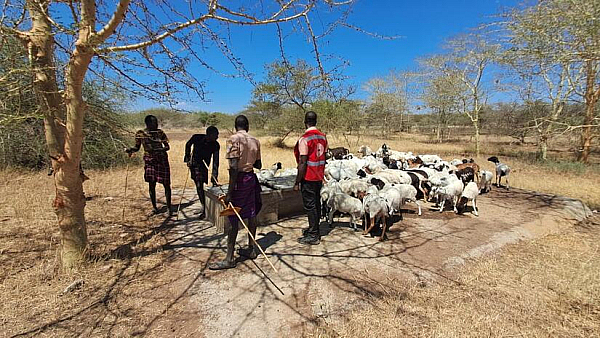
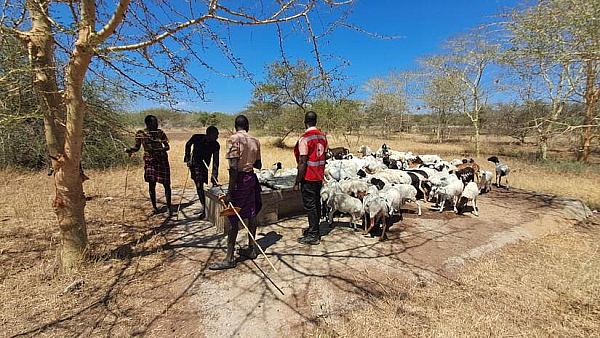
In parts of the Karamoja region, north-eastern Uganda, the effects of prolonged drought are already visible. Water sources have dried up or fallen to very low levels. Families are travelling further to find water, while pasture continues to deteriorate, putting pressure on livelihoods that depend on livestock and crop production.
One of the clearest signs of the worsening situation is Kobebe Dam in Karamoja’s Moroto district, normally a critical source of water for communities and their livestock. This year, the dam has dried up.
In Nakidongo, Moroto district, more than 645 households displaced from Kotido District have moved closer to the area in search of water. Pastoralists from Loima in Kenya’s Turkana County have also crossed into the area with their livestock, seeking water and pasture. As more people and animals depend on an increasingly limited supply of natural resources, pressure on already vulnerable communities continues to grow.
For these families, disaster risk is not a distant forecast. It is already shaping where they live, how they care for their livestock and how they meet their most basic needs.
The Uganda Red Cross Society is responding by providing multipurpose cash assistance to more than 5,000 people affected by drought in Karamoja. It is also providing water for livestock, supporting pastoralist communities and their animals, including goats, sheep, cattle and camels. This assistance is helping address critical water shortages and protect livestock and livelihoods during the ongoing drought.
Red Cross volunteers, who are part of the communities they serve, play an important role in understanding local needs, sharing information and helping communities respond to changing risks. Their local knowledge and trusted relationships can help ensure that warnings reach people and translate into practical action to protect lives and livelihoods.
Yet significant gaps remain. Communities need sustained support for water access, livestock, food security and the protection of livelihoods. And the situation extends beyond Moroto: other parts of Karamoja, including Kaabong, Karenga, Napak and Kotido, are facing similar challenges linked to water scarcity, depleted pasture and growing food insecurity.
On 13 October, the world marked the International Day for Disaster Risk Reduction under the theme “Resilience Starts at Home.” The situation in Karamoja is a reminder that resilience is not an abstract idea. It is about whether families can access water, protect their livelihoods, understand warnings and get support before a crisis deepens.
One climate pattern, different risks across Africa
El Niño is a naturally occurring climate phenomenon, but its effects are not the same everywhere. Its impact depends on where people live, the season, existing vulnerabilities and how prepared communities are to respond.
Across parts of the Greater Horn of Africa, forecasts point to an increased likelihood of heavy rainfall and flooding during the October–December 2026 rainy season. Meanwhile, rainfall deficits have already affected parts of Ethiopia, South Sudan and Uganda’s Karamoja region.
Further south, the coming season brings an increased risk of below-average rainfall, prolonged dry spells and above-average temperatures. Parts of the Sahel are also experiencing rainfall deficits.
These risks can have far-reaching consequences. Flooding can damage homes, destroy crops, contaminate water sources and cut off roads. Drought and heat can reduce water availability, undermine livestock and crop production, and put further pressure on household incomes and food supplies.
For communities already facing conflict, displacement or food insecurity, another climate shock can deepen existing hardship. The consequences may take months to emerge as harvests, livestock and household incomes come under pressure and families struggle to meet their needs during subsequent lean seasons.
The challenge is not simply to anticipate the weather. It is to understand what changing conditions could mean for people—and to act on that information in time.
Turning forecasts into action
Acting early means preparing before a crisis escalates and being ready to respond when risks become more immediate. This includes ensuring warnings reach communities, mobilising volunteers, positioning essential supplies and putting plans in place to protect lives and livelihoods.
Across Africa, Red Cross and Red Crescent National Societies are working to translate risk information into practical action.
In Southern Africa, Early Action Protocols for droughts have been activated in Lesotho and Eswatini. These interventions include cash assistance, early warnings, community preparedness, water support and measures to protect livelihoods, helping households meet essential needs and prepare for worsening conditions.
In areas facing potential flooding, preparedness includes strengthening early warning systems, mobilising volunteers, checking emergency supplies, planning evacuations, and ensuring teams are ready to support search and rescue if needed.
The work is different from one place to another because the risks are different. But the objective is the same: to give communities more time and more options to protect themselves before the worst happens.
National Societies are central to this effort. Their volunteers and local branches understand their communities, know who may need additional support and can help turn warnings into decisions people can act on. They also help ensure preparedness reaches people who might otherwise be overlooked.
Resilience starts at home, but cannot end there
Households play an important role in disaster preparedness. Knowing what to do when a warning is issued, protecting essential supplies, planning where to go during a flood and taking steps to safeguard water and livelihoods can all help reduce risk.
But households cannot prepare for every threat on their own. They need timely and accessible warnings, reliable information, safe infrastructure, and essential services. Communities also need trained responders, functioning local systems and the resources to act when risks increase.
Building resilience therefore requires collective action. The IFRC Africa Regional Office works with National Societies to strengthen coordination, identify readiness gaps and improve operational preparedness, helping ensure volunteers, supplies, logistics and early action mechanisms are in place as risks evolve. This support helps National Societies prepare for different scenarios and respond quickly when communities need assistance.
Early action cannot prevent floods or droughts, and forecasts cannot remove all uncertainty. But acting on credible warnings can help reduce avoidable losses, protect livelihoods and ensure assistance reaches people before their options narrow.
Acting on what we know
Preparedness must continue as forecasts evolve and conditions change. It means listening to communities, monitoring local risks and adapting plans as new information becomes available.
In Karamoja, the drying up of Kobebe Dam shows what resilience means for communities whose lives and livelihoods depend on access to water and pasture. When these resources disappear, families need the support and means to protect their livelihoods and cope with growing pressures. Resilience starts at home, but it depends on communities having access to information, support and resources to face the challenges ahead.
Across Africa, the risks ahead are varied, and communities will not experience El Niño in the same way. What they share is the need for timely information, practical support and the opportunity to act before conditions deteriorate further.
We cannot control the weather. But we can act on what we know.
Resilience starts at home. Preparedness helps make it possible.
Distributed by APO Group on behalf of International Federation of Red Cross and Red Crescent Societies (IFRC).


