

Early in 2025, in a quiet Malawian village, 16‑year‑old girl named Amaluwasa* was pulled out of school and forced into marriage, a single moment that captures the collision of tradition, inequality, and lost potential. To some families facing poverty, this practice is perceived as a way to lighten the burden of daily survival. But for Amaluwasa it meant the end of her education and the loss of her childhood. Her case is not unusual; Malawi has one of the highest rates of child marriage in sub-Saharan Africa, with 42% of girls married before the age of 18. In a village several kilometres away from Amaluwa’s home, 14-year old Nohakhelha* parents were in a years long disagreement about allowing her to go to school with her mobility disability. In the next village, neighbours were in conflict over a piece of land.
In Phalombe and Machinga districts, persistent harmful practices such as gender-based violence, early child marriages, forced initiation rites, land disputes, property and inheritance grabbing, and child abuse are widespread. These practices drive school dropouts, teenage pregnancies, and economic dependency, leaving many people trapped in cycles of poverty and abusive relationships.
The context was clear: women in these communities often felt silenced. They were afraid to speak to male chiefs about sensitive issues like intimate partner violence. Decisions were frequently biased, with men favouring fellow men, leaving women and girls without justice or protection. Leadership was seen as a male domain, and women were expected to remain in the background. For years, women were often sidelined in matters of peace and community leadership, their voices drowned out by traditional structures.
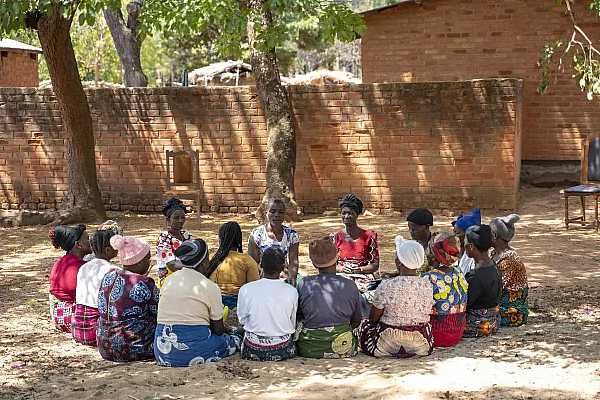
The Sustaining Community Women Movement for Peacebuilding and Humanitarian Response project, implemented by Youth Net and Counselling (YONECO) with support from the Women’s Peace and Humanitarian Fund (WPHF) through UN Women, has begun to rewrite that narrative. YONECO trained women chiefs and spouses of chiefs in conflict resolution, mediation, and peacebuilding. “I never thought I could stand in front of a crowd and speak with confidence,” admitted Mercy Msolomba from Mizinga in Machinga, one of the 30 women leaders who completed training in leadership, conflict analysis, advocacy, negotiation, and public speaking. “Now, I can negotiate, I can mediate, and people listen.” She said. Her words reflect a broader shift. Women, including chief’s wives, formed forums where mothers and girls feel safe to share their concerns. “At first we thought leadership was only for our husbands,” recalls Josephine Mbalika, Fumukazi Muthumpwa from Mkhumba in Phalombe. “But after training, we saw that we too are leaders.” She added. Armed with new skills, the women peacebuilders began to intervene in cases that previously went unheard.
The result was transformative. When Amaluwasa’s case was reported to the women chiefs’ forum by her teacher, the forum visited her home, spoke with her parents, and explained the dangers of early marriage. The marriage was dissolved, and Amaluwasa returned to school. Nohakhelha has also returned to school following the intervention of a women peace circle. In another case, a 15-year-old girl impregnated by a 16-year-old schoolboy was sent to live with him. The women chiefs wrote to both families, mediated discussions, and ensured both children went back to school in Stola area in Machinga. Mercy Muhowa, a chief’s wife in Phalombe, has resolved nine cases since October 2025, ranging from child abuse to marital disputes, showing how women leaders are now trusted mediators in their communities. When cases are too complicated, the women’s forums refer the cases to the police and social welfare office.
Women peacebuilders are making a difference in their communities; they are raising awareness, changing norms, and proving that leadership is not defined by gender but by fairness and courage. Most importantly, women and girls feel freer to speak up, knowing there are leaders who will listen. Data from the program showed that more than 108 women across the two districts were trained, with chiefs’ spouses forming a significant portion of participants. In Phalombe, community-led interventions contributed to the dissolution of 65 child marriages, with 51 girls returning to school, reinforcing the protective environment for women and girls.
*Not real name
Distributed by APO Group on behalf of UN Women – Africa.


