

As drought worsens in Imehejek, forcing herders to move their livestock further in search of pasture and water, fears are growing that competition over scarce resources could reignite conflict between the Lopit and neighbouring communities.
Years of cattle raids, retaliatory attacks and child abductions have left families grieving, communities divided, and relations with neighbouring groups strained. Women and children have borne much of the suffering.
Now, community members are calling on traditional leaders, known as “Omonyei miji”, to use their influence to promote dialogue and prevent further violence.
“Women have suffered greatly for years because of insecurity. We cannot continue with these senseless killings and fighting. It is time for the Lopit community to sit down with our neighbors and find a peaceful way forward,” said Christine Micity Martin, a trained nurse at Imehejek Primary Health Centre.
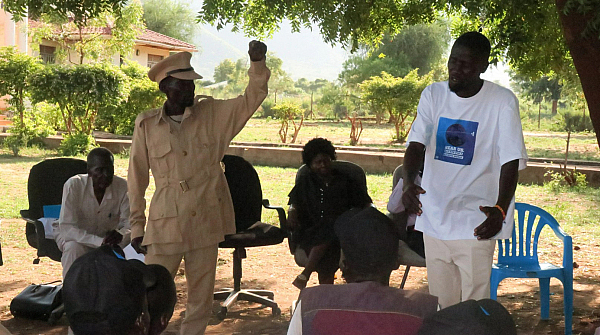
The call for dialogue was made at a UNMISS-supported Citizens’ Talk forum designed to help the three neighbouring communities to address grievances and risks before tensions escalate.
Kulang Vicky, Deputy Chairperson of the Civil Society Organisation Network in Eastern Equatoria State, urged traditional leaders and community representatives to work together to prevent competition over resources from sparking further violence.
“Communities must work with the Omonyei miji to find solutions before persistent climate conditions drive resource competition and further conflict.”
Participants also called for greater community ownership of peace and development initiatives, emphasizing that lasting solutions must be locally driven.
“The time has come to move beyond reliance on international organizations, donors and the United Nations. These partners can support and complement community-led initiatives, but cannot substitute for local ownership and responsibility,” said David Logiragole, UNMISS Liaison Assistant.
For Imehejek, preventing conflict is becoming increasingly urgent.
“We are at a critical moment in our relationship with our neighbours. Our grazing lands are drying up, and our cattle may have to move into neighbouring areas. The Omonyei miji must engage our neighbours so we can agree on how to share the resources we all depend on,” said Mathew Oromo Morris, Acting Chief Administrator of Imehejek Administrative Area.
The Citizens’ Talk offered an opportunity to rebuild trust and strengthen relations, with participants stressing that traditional leaders must become agents of peace, using their influence to encourage dialogue, cooperation and the peaceful sharing of resources.
Ultimately, the goal is to ensure that women, children, herders and other community members can move, work and access essential resources without fear.
Distributed by APO Group on behalf of United Nations Mission in South Sudan (UNMISS).


