
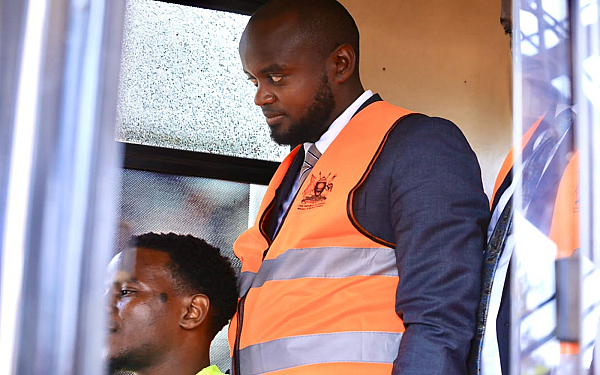

A bus that should have paid Shs15,000 to use the Kampala-Entebbe Expressway was charged only Shs5,000 after an electronic toll card meant for light vehicles was manually used to open the barrier at the Kajjansi Toll Centre, shocking Members of Parliament during an on-spot inspection.
The incident raised fresh concerns about revenue leakage, accountability and the effectiveness of the toll system on the expressway, particularly after MPs discovered that manual intervention is still possible despite earlier assurances that the system is automated.
The Parliamentary Committee on Physical Infrastructure chaired by Hon. Mwine Mpaka witnessed the incident on Tuesday, 11 August 2026, during an assessment of toll collection, management and maintenance of the Kampala-Entebbe Expressway.
In the test, a toll card issued under Class 2 (Light Vehicles with or without trailer), attracting a Shs5,000 charge per trip was used to clear a bus belonging to Class 4a (Large Goods Vehicles and Buses, 4-5 axles), which should ordinarily pay Shs15,000 per trip.
Although the card was not appropriate for the bus category, the barrier was manually opened by the officer on duty, allowing the vehicle.
The development came as a Ministry of Works and Transport engineer recommended that government takes over toll collection on the expressway through a dedicated government-owned company.
Engineer Isaac Menya, a Network Planning Engineer was tasked by the committee to advise on the best model for managing the toll points following the takeover of operations by Pinnacle Security from EGIS.
Menya said government can directly manage toll collection provided the arrangement guarantees sufficient funds for maintenance.
“My recommendation is that it does no harm for government to actually manage this toll directly, but under some mechanism where there is availability of money to maintain that road,” Menya said.
Menya cited Ethiopia, where toll expressways are largely managed through state-owned public enterprises and Kenya, which uses public-private partnerships in which private investors build, finance and operate highways through long-term concessions.
He however, warned that if the expressway is placed under conventional government systems without an appropriate operational structure, bureaucratic procedures could delay responses to routine problems.
Menya said a dedicated government entity can provide the operational flexibility needed to manage toll revenue and undertake routine maintenance without lengthy administrative procedures.
Meanwhile, Pinnacle Security General Manager, Ivan Katamba told the committee that the company will discuss with the Ministry of Works and Transport, the possibility of scrapping toll-free access for some categories of road users.
The proposal follows concerns raised by MPs that toll exemptions could be contributing to revenue losses.
Hoima City Woman Representative, Hon. Nyakato Asinansi wondered why contractors undertaking maintenance works on the expressway should be exempted from the Shs5,000 toll when they are paid by government.
Mwine Mpaka also demanded a comprehensive list of all persons and categories of road users currently holding toll-free passes.
The committee’s inspection at Kajjansi was part of its wider on-spot assessment of the management, toll collection and maintenance of the Kampala-Entebbe Expressway.
Distributed by APO Group on behalf of Parliament of the Republic of Uganda.


