
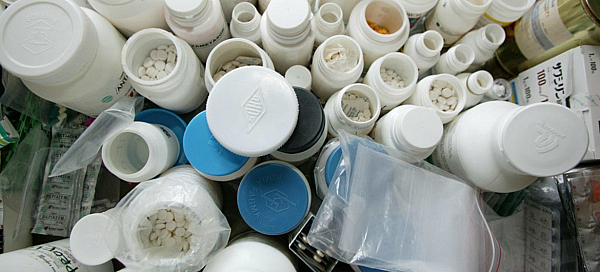

Antibiotics, malaria treatments, painkillers, opioids. More than 250 tonnes of medical products were seized over six years in Central Africa. Behind those numbers is an illicit market that thrives not simply despite the region’s fragile health systems, but in part because of them.
When medicines are scarce, unaffordable or simply too far away, illicit sellers have proved adept at filling the void.
That is the dynamic described in a new report released Tuesday by the United Nations Office on Drugs and Crime (UNODC). The illicit trade extends far beyond falsified drugs. It includes genuine medicines diverted from legitimate supply chains, unapproved products and drugs smuggled across borders.
251 tonnes seized
From 2020 through 2025, authorities seized 251 tonnes of medical products in Cameroon, Republic of Congo, Gabon, Central African Republic and Chad. Annual seizures rose from about five tonnes in 2020 to nearly 116 tonnes in 2024, before exceeding 97 tonnes in 2025.
The United Nations cautioned against interpreting the increase as a straightforward measure of the trade’s growth. Larger seizures can reflect both greater trafficking and more aggressive enforcement, and the available data vary considerably among countries and from year to year.
Still, the scale is striking. Cameroon accounted for nearly all of the seizures recorded in 2025, with 96 tonnes intercepted, compared with just 2.5 tonnes five years earlier. The products intercepted across the region range from antibiotics, antimalarial and anti-inflammatory drugs to painkillers and such psychoactive substances as tramadol and pregabalin.
“The report outlines a multimodal trafficking system that uses maritime, riverine, air and road routes and involves a broad range of actors,” said Sylvie Bertrand, UNODC’s regional representative for West and Central Africa.
High costs fuel illicit markets
But the report, produced with the World Health Organization (WHO) and the Economic and Monetary Community of Central Africa (CEMAC), suggests that the roots of the trade are partly beyond the reach of law enforcement.
Malaria, tuberculosis and HIV remain widespread across the region, while public health systems often struggle to provide treatment. In 2023, the WHO’s universal health-coverage index placed all six countries in the Central African economic bloc among the world’s poorest performers. Chad scored just 26 out of 100, compared with a global average of 71.
Distance and cost compound the problem. In the Central African Republic and Chad, more than half the population lived at least two hours from a public hospital providing emergency care, according to data cited in the report. In Chad, a prefilled insulin syringe cost the equivalent of nearly 16 days’ wages for the lowest-paid government employee.
Competitive pricing
Under those circumstances, buying medicine on the street can become less an alternative to the formal health system than a necessity. Consumers in the Central African Republic told researchers that informal sellers allowed them to “buy one or two tablets for about 100 CFA francs” – roughly 20 cents – rather than “buy the medicines in a box of 12 [at a pharmacy]”.
The result is a marketplace where legitimate, falsified and substandard medicines can be difficult to distinguish.
From 2013 to 2025, WHO’s surveillance system recorded incidents involving 228 medical products in the Central African economic bloc. Of those, 71 per cent were classified as falsified and 11 per cent as substandard. Perhaps more troubling, a third of the incidents were detected in regulated supply chains, suggesting that buying medicine from an authorised outlet does not eliminate the risk.
In April 2025, the WHO reported falsified batches of amoxicillin in Cameroon and the Central African Republic that did not contain the active ingredient listed on their labels. In September 2026, Cameroonian authorities seized thousands of cartons in Yaoundé containing, among other things, counterfeit medicines, packaging materials used to repackage drugs and psychotropic substances.
From ports to armed groups
The trafficking routes largely follow the arteries of legitimate regional commerce. The ports of Apapa in Nigeria and Douala in Cameroon, along with river ports in Brazzaville and Bangui, were identified as major entry points. Authorities also seized 7.3 tonnes of medical products at airports across the region from 2020 through 2025.
The criminal networks behind the trade are equally varied. They include clandestine manufacturers, wholesalers, informal vendors, couriers, health care workers, corrupt public officials and online sellers.
Armed groups have also found ways to profit, according to the report, by looting health facilities, reselling medicines or collecting “taxes” from convoys crossing territory under their control.
Dire consequences for patients
For patients, the consequences can be dire. Medicines containing the wrong ingredients or incorrect doses can cause poisoning, treatment failure and death. They can also contribute to antimicrobial resistance, allowing bacteria and other pathogens to evolve in ways that make existing medicines less effective.
In 2023, 12 children in Cameroon died after taking a pediatric syrup containing contaminated ingredients, according to UNODC.
Yet, the same weaknesses that expose patients to illicit medicines also complicate efforts to stamp out the trade.
“No State can tackle this transnational challenge alone,” said Ms. Bertrand, the agency’s regional representative.
The report calls for countries to harmonise their laws, strengthen controls and improve cross-border cooperation. But, it also argues for expanding access to safe and affordable medicines, for the illicit market is responding to a demand the formal health system has failed to meet.
Cutting off illegal supplies without addressing the shortages, high prices and distances that drive patients toward them risks leaving the market for illicit medicines largely intact.
Distributed by APO Group on behalf of UN News.


