

At the border between South Sudan and the Democratic Republic of the Congo (DRC), trade and family ties connect communities on both sides. For many residents of Ezo, Western Equatoria State, crossing the border is part of everyday life and an essential source of income.
But with Ebola cases reported in the DRC, the busy border has also become a critical point for disease prevention.
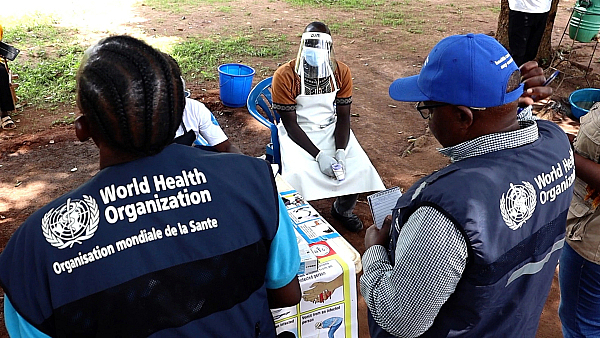
Supported by the United Nations Mission in South Sudan (UNMISS), a World Health Organization (WHO) team travelled from Yambio to Ezo for a 10-day mission to assess preparedness, strengthen screening and support frontline health workers.
For residents like Nathalia Umjuma, cross-border trade is a matter of survival.
“I always go to buy palm oil to sell because of poverty. When they people buy my palm oil, I use the money for food and pay school fees,” she said.
Nathalia’s experience highlights the challenge facing communities along the border: protecting people from a potentially deadly disease while allowing them to maintain the livelihoods they depend on.
“We are just hearing that there is a disease. We must be careful, but we understand Ebola not here yet,” explained Lilly John, a resident of Ezo.
At the main crossing point, health workers are already screening travellers for signs of illness.
“We are visiting to ensure that whoever is crossing from DRC is screened and whoever is leaving is also screened,” said Brian Assimwe, a WHO epidemiologist.
But monitoring movement across the porous border remains a challenge. Local authorities have identified three major routes into the DRC, but only one is currently being monitored.
“We have three major entry points to Congo, and we have been taking control of only one entry point, which links Ezo to Nabiapai, and onwards, to Congo. We expect that our WHO partners will see what they can do to make the remaining screening points active,” stated Henry Zinario, Acting Commissioner of Ezo.
Preparedness also extends to the local health system. Health workers are being trained to identify suspected cases, protect themselves, isolate patients and ensure timely referral if Ebola is detected.
“It is up to us to educate communities and ensure they have full information on how they can protect themselves from contracting this dangerous disease,” explained Cosmas Bonifes, a health worker.
WHO has provided personal protective equipment and sample-collection materials to the county health department, strengthening frontline workers’ capacity to respond to suspected cases.
For UNMISS, security is an important part of enabling the health response. Peacekeepers and military observers assessed screening centres and surrounding areas to identify security concerns and support the safe movement of health teams.
“We are assisting our humanitarian partners in conducting the assessment of the screening centers for Ebola. This is important we understood what the present situation is in terms of the security of this place,” concluded Vanshay Kapur, an UNMISS Military Observer.
In Ezo, Ebola preparedness is ultimately about people: traders trying to earn a living, families relying on cross-border connections and health workers acting before an outbreak reaches their communities
Distributed by APO Group on behalf of United Nations Mission in South Sudan (UNMISS).


