

In medical emergencies, the ability to recognise a life-threatening condition, make rapid decisions and deliver the right intervention can determine the difference between life and death. Within a military environment, such capabilities are critical to protecting personnel, strengthening force health protection and sustaining operational readiness.
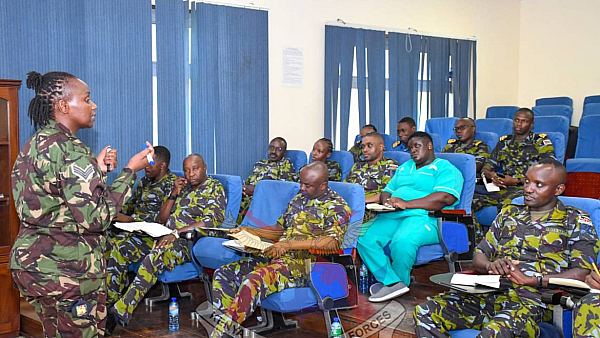
Medical personnel from The Kenya Navy Hospital (TKNH) are undertaking Basic Life Support (BLS) and Advanced Cardiac Life Support (ACLS) training at the Kenya Naval Training College (KNTC) to strengthen their capacity to respond effectively to critical medical emergencies.
The one-week programme is designed to enhance participants’ ability to rapidly identify and manage life-threatening conditions while reinforcing essential resuscitation and emergency care techniques.
Speaking during the opening ceremony, the Commandant TKNH, Colonel Anthony Naibei, underscored the critical role of competent medical practitioners in safeguarding the lives, health and welfare of Service personnel.
He emphasised that timely, professional and effective healthcare delivery is fundamental to building confidence in military medical services, particularly when personnel require urgent and potentially lifesaving interventions.
The training provides participants with an opportunity to sharpen practical skills in patient assessment, resuscitation and coordinated emergency response. Through hands-on training and scenario-based exercises, participants are strengthening their ability to assess rapidly deteriorating patients, make informed clinical decisions and administer appropriate interventions under pressure.
Basic Life Support provides essential competencies for recognising cardiac arrest, initiating cardiopulmonary resuscitation and providing immediate lifesaving assistance.
Advanced Cardiac Life Support builds on these competencies by strengthening the management of complex cardiovascular emergencies and coordinated resuscitation.
Beyond technical proficiency, the programme places strong emphasis on teamwork, preparedness and clear communication.
Effective emergency medical response requires healthcare teams to work cohesively, coordinate interventions and maintain situational awareness in high-pressure environments where every second counts.
The skills acquired during the training will enhance the capacity of TKNH medical personnel to respond confidently and effectively to cardiac emergencies and other life-threatening conditions. This will further strengthen the quality, reliability and responsiveness of healthcare support available to Kenya Navy personnel.
Continuous professional development remains essential to ensuring military healthcare practitioners maintain competencies relevant to evolving clinical and operational demands. Regular training also enables medical teams to refine procedures, strengthen coordination and sustain readiness for emergencies within both healthcare facilities and operational environments.
By investing in critical lifesaving competencies, TKNH is strengthening its emergency medical response capability and contributing to a responsive and resilient military healthcare system capable of delivering timely and effective care when it matters most.
Distributed by APO Group on behalf of Ministry of Defence – Kenya.


